
Case study / P&C insurance

Auto liability, worked end to end.

A working example of the Loresse AI Operating System: every stage of the auto liability claim — from first notice of loss through closure — carried by agents, with the judgment of claims professionals at the center of every decision.

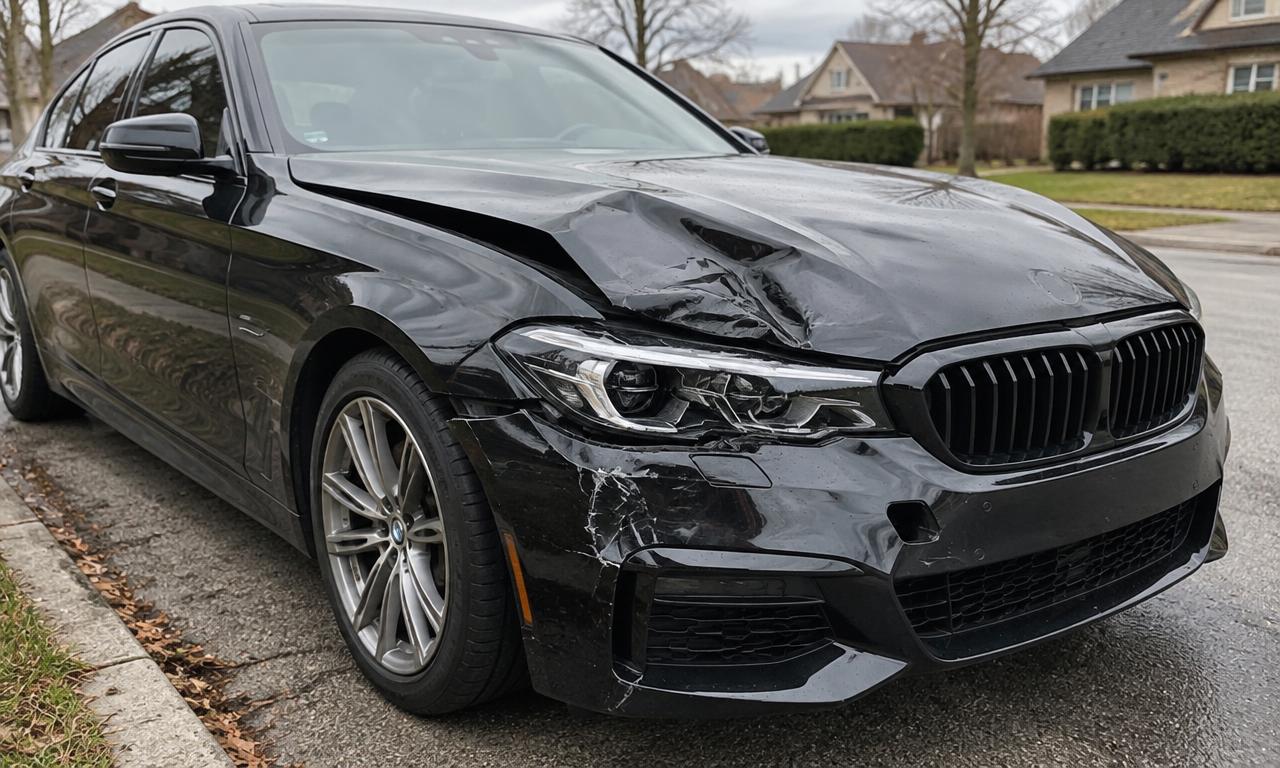
A damaged vehicle following a road incident

The work

A claim is an event, not a stack of paperwork.

One collision produces a police report, photographs, medical records, bills, appraisals, demand letters, and phone calls — and an adjuster expected to connect all of it before a single decision.

On the Loresse AI Operating System, that assembly is the software's job. Documents are read as they arrive, the claim record is built automatically, and the adjuster starts each day looking at claims rather than looking for them. The hours once spent navigating screens and re-keying fields become hours spent on the decisions and the people behind them.

The workflow

Six stages, one system.

01 / 06

Visualize the claim

Document intelligence scans the first notice of loss, police report, photographs, and correspondence as they arrive, then assembles them into a single visual claim view. The adjuster sees the whole event at once instead of navigating screens of fields — a step that removes roughly 400 clicks from a claim's early handling.

02 / 06

Reconcile the intake

A claim macro is generated automatically, consolidating 22 manual data-field steps and about 100 further clicks into one reviewable summary. Coverage, parties, vehicles, and injuries are aligned so the adjuster confirms accuracy rather than re-keying it.

03 / 06

Recommend and reserve

Liability is assessed against jurisdiction-specific rules, fault is determined, vehicle damage is estimated, and bodily-injury exposure is evaluated. Reserve requirements are recommended for the adjuster — who reviews, edits, and owns the decision before anything moves.

04 / 06

Communicate

Acknowledgment, acceptance, denial, and bodily-injury evaluation letters are drafted as agentic documents, ready for the adjuster's review and signature. Voice AI captures call notes, and outbound phone and email stay in the adjuster's hands — the relationship work no platform should take away.

05 / 06

Manage the case

Vendor coordination, claimant processing, and additional-documentation intake — medical release forms, appraisals, invoices, demand packages, counter-offers — are tracked in one place. When one event produces many claims, they are viewed together as one, not scattered across files.

06 / 06

Close the claim

Closure procedures and final payments are automated, with the adjuster validating that every step was followed before the file closes. The claim's reasoning — what was decided, by whom, and why — remains as a complete record.

Human judgment at the center

The adjuster remains accountable.

At every stage the system pauses for human review: intake reconciliation is confirmed before the claim advances, liability and reserve recommendations are reviewed before they are accepted, and closure procedures are validated by the adjuster before the file closes.

Where confidence is low or essential material is missing, the work stops and waits for a person. That matters most in bodily-injury evaluation, liability, reserves, and communications — where context, empathy, and accountability cannot be reduced to a checkbox.

What the system does

Capabilities behind the claim.

Agentic liability assessment

Fault determination and claim-type evaluation applied with jurisdiction-specific rules, surfaced as recommendations for adjuster review.

Bodily-injury evaluation

Injury analysis with confidence levels, evaluation worksheets, and the ability to decline payment where evidence does not support it.

Medical bill review

Bills reconciled against injury reports and procedure codes — duplicates removed, out-of-scope charges and misleading billing flagged before payment.

Damage estimation & valuation

Repair estimation and third-party vehicle valuation brought into the workflow, with salvage routed when repair cost exceeds value.

Agentic document creation

Letters, evaluations, and correspondence produced as editable documents, not templates with blanks.

Fraud detection

Patterns across bills, reports, and claims surfaced to the adjuster — a recommendation to examine, never an automated denial.

The value

The workforce math makes the case.

6:1

Retiring adjusters for every new adjuster joining the economy.

The claims profession is shrinking faster than it can be hired back. The knowledge leaving with each retirement is not replaced by recruiting — it has to be captured where it can keep working. That is what the platform does: it holds the expertise, so the operation does not lose it.

Scale with AI, not headcount.

Claim volume no longer sets the size of the team. With expertise embedded in the workflow, the same adjusters absorb growth, catastrophe response, and seasonal surges by extending the system — capacity scales with the software, and adjusters stay on the judgment that matters.

Lower cost to recruit, hire, and train.

Every new adjuster starts with the institution's knowledge already in the workflow, not years away from it. Time-to-competence collapses — and with it, the recruiting, hiring, and training spend that used to buy it, along with the risk of losing that investment to the next resignation.

Beyond auto liability

The same system. More lines of business.

Auto liability is one working example. The Loresse AI Operating System also completes end-to-end processing of workers' compensation and other bodily-injury claims — the same document intelligence, agentic workflow, fraud detection, and adjuster-in-command design, applied to the claim types where human attention matters most.

A working example built on the Loresse AI Operating System. No customer identity, private claim records, or confidential implementation figures are published on this page.

What would this look like in your claims operation?

Start a conversation